Introduction
Your logo is one of the most important elements of your brand identity. It helps customers recognize your business across websites, social media, advertisements, presentations, videos, and other marketing platforms.
But in today’s highly visual digital world, a static logo may not always be enough.
This is where logo animation comes in.
An animated logo transforms a traditional static logo into a short motion sequence that can grab attention, communicate personality, and make your brand more memorable. From a simple logo reveal to a sophisticated 3D animation, moving logos are becoming an increasingly popular part of modern branding.
In this guide, we’ll explain what logo animation is, why your brand needs one, different animation styles, and where you can use an animated logo.
What Is Logo Animation?
Logo animation is the process of adding movement, transitions, effects, and sound to a traditional logo.
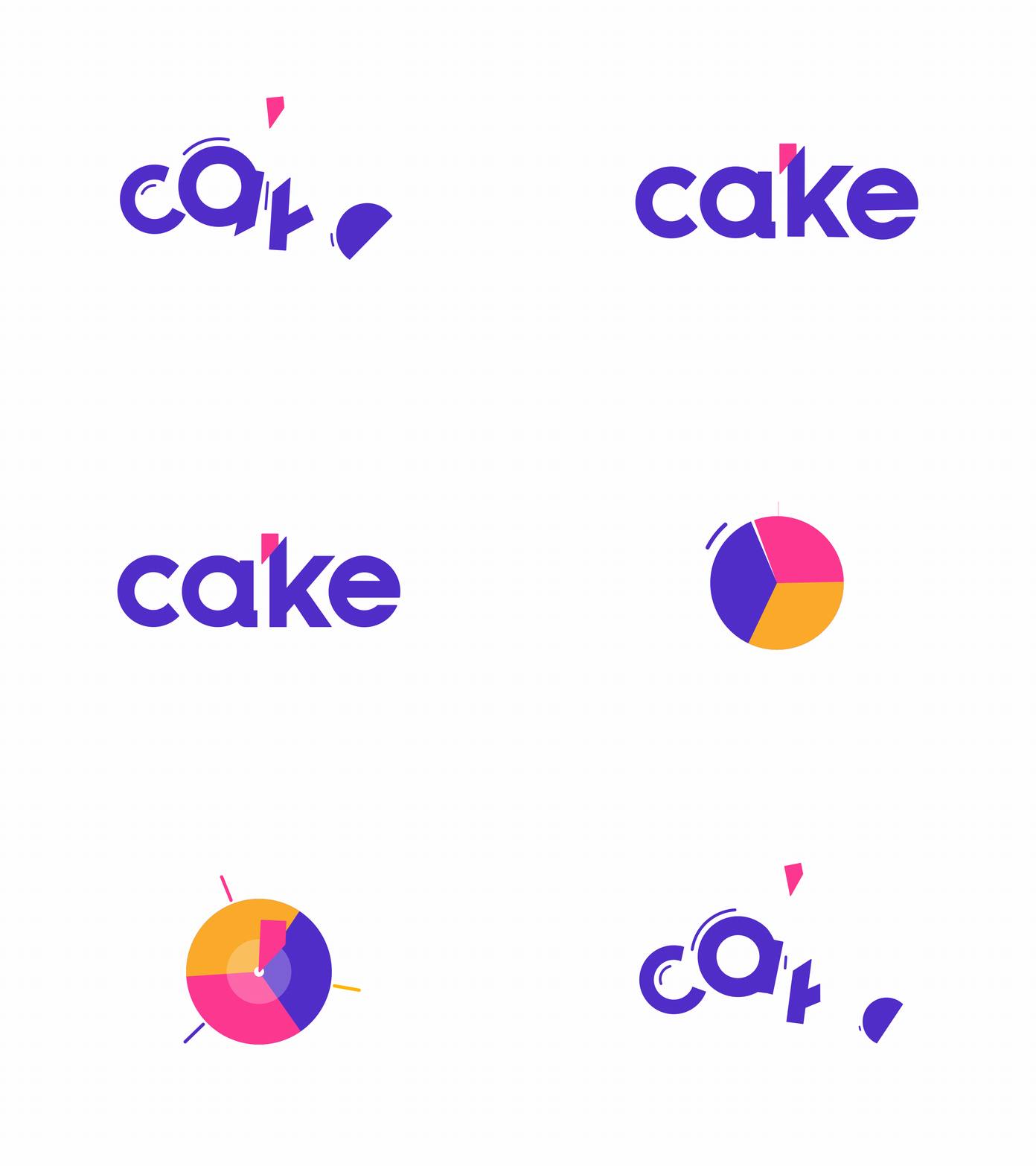
Instead of simply displaying a logo, animation can make its elements appear, move, transform, or reveal themselves in a creative sequence.
For example, an animated logo might:
- Reveal the logo through a smooth transition
- Animate individual letters
- Draw the logo onto the screen
- Use particles or light effects
- Transform one shape into another
- Include 2D or 3D motion
- Combine the logo with a short sound effect
A good logo animation is usually short, recognizable, and consistent with the brand’s identity.
Why Does Your Brand Need a Moving Logo?
1. It Captures Attention
People scroll through large amounts of visual content every day. A moving logo can immediately attract attention in a way that a static image may not.
A short animation at the beginning or end of a video can create a professional visual moment and reinforce your brand.
Brand Tip: Keep the animation short and focused. The goal is to enhance your brand, not distract from it.
2. It Makes Your Brand More Memorable
Movement can make a visual identity more distinctive.
When customers repeatedly see the same logo animation across videos, advertisements, presentations, and social media content, the animation can become part of the brand experience.
A recognizable combination of:
Logo + Motion + Sound
can create a stronger brand signature than a static logo alone.
3. It Makes Videos Look More Professional
Video content has become an important marketing tool for businesses. Adding an animated logo to the beginning or end of a video can give the content a polished and professional appearance.
Animated logos can be used in:
- YouTube videos
- Instagram Reels
- Promotional videos
- Corporate presentations
- Product videos
- Advertisements
- Website videos
- Social media content
Even a simple logo reveal can make a video feel more complete.
4. It Helps Build a Consistent Brand Identity
Strong branding is about consistency.
Your logo animation can use the same:
- Brand colors
- Typography
- Shapes
- Design language
- Visual effects
- Sound identity
used throughout your other marketing materials.
This creates a consistent experience across different platforms.
5. It Works Especially Well on Digital Platforms
Traditional logos were primarily designed for static applications such as business cards, signage, packaging, and print materials.
Modern brands also need visual identities that work in motion.
An animated logo can be especially useful for digital-first marketing channels such as social media, websites, online advertising, streaming content, and video platforms.
Popular Logo Animation Styles
1. Logo Reveal Animation
The logo gradually appears on screen using movement, light, shapes, or other visual effects.
This is one of the most versatile styles and works well for corporate and professional brands.
2. 2D Logo Animation
A flat logo is animated using simple movements, transitions, and graphic effects.
This style is clean, modern, and suitable for many businesses.
3. 3D Logo Animation
The logo is given depth and animated in a three-dimensional environment.
3D animation can create a premium and impressive look, particularly for technology, entertainment, gaming, automotive, and creative brands.
4. Minimal Logo Animation
A minimal animation uses simple movement rather than complex effects.
For example, a logo might smoothly scale, rotate, slide, or fade into position.
This style is ideal for brands that want a clean and professional appearance.
5. Kinetic Typography Logo
In this style, letters or words become the focus of the animation.
Individual characters may move, transform, or assemble to create the final logo.
6. Sound-Synchronized Logo Animation
The animation is combined with a short sound effect or audio signature.
When used consistently, this can help create a recognizable audio-visual brand identity.
Where Can You Use an Animated Logo?
An animated logo can be used across many digital marketing channels.
Social Media
Use it at the beginning or end of:
- Instagram Reels
- YouTube Shorts
- Facebook videos
- LinkedIn videos
- Promotional posts
YouTube
Animated logos can be incorporated into:
- Video intros
- Video outros
- Channel branding
- Subscribe animations
- Promotional content
Website
You can use a moving logo in selected website areas such as video content, landing pages, or digital presentations.
Advertisements
Animated branding can appear at the beginning or end of video advertisements to reinforce brand recognition.
Presentations
Businesses can use animated logos in corporate presentations, product demonstrations, and event videos.
How Long Should a Logo Animation Be?
A logo animation generally works best when it is short.
For many applications, an animation lasting around 2–5 seconds can be enough to establish the brand without slowing down the content.
The ideal duration depends on the animation style and where it will be used.
For a fast social media video, a shorter animation may work better. For a cinematic brand intro, a slightly longer sequence may be appropriate.
What Makes a Good Logo Animation?
A successful animated logo should be:
- Short – Avoid unnecessary delays.
- Recognizable – The original logo should remain clear.
- Brand-consistent – Use your existing colors and design language.
- Professional – Avoid excessive effects that don’t match the brand.
- Versatile – Create versions suitable for different platforms.
- Memorable – Give the animation a distinctive visual identity.
- High quality – Export it in formats suitable for your intended platforms.
The best logo animation isn’t necessarily the most complicated one. It is the one that communicates the brand effectively.
Static Logo vs Animated Logo
| Feature | Static Logo | Animated Logo |
|---|---|---|
| Traditional branding | Excellent | Excellent |
| Social media videos | Good | Excellent |
| Video introductions | Limited | Excellent |
| Digital presentations | Good | Excellent |
| Motion branding | No | Yes |
| Visual engagement | Moderate | High |
| Sound integration | No | Possible |
| Brand storytelling | Limited | Stronger |
A brand doesn’t have to choose between the two. A strong branding system can include both a static logo and an animated version.
How to Create a Professional Logo Animation
A typical logo animation workflow includes:
- Start with the original logo in a high-quality format.
- Separate logo elements when necessary.
- Define the animation concept.
- Choose the appropriate animation style.
- Add movement and transitions.
- Apply brand colors and visual effects.
- Add sound if appropriate.
- Review the animation at different sizes.
- Export versions for different platforms.
- Keep the original editable project file for future updates.
Conclusion
Logo animation is more than a visual effect. It can become an important part of a modern brand identity.
A well-designed moving logo can capture attention, improve brand recall, make videos look more professional, and create a consistent digital brand experience.
Whether you’re a startup, small business, creator, agency, or established company, having an animated version of your logo can give you more flexibility when creating modern digital content.
The key is to keep the animation simple, recognizable, professional, and consistent with your brand.
Frequently Asked Questions (FAQ)
1. What is logo animation?
Logo animation is the process of adding movement, transitions, effects, and sometimes sound to a traditional static logo.
2. Why should a business have an animated logo?
An animated logo can help capture attention, strengthen brand recognition, improve video presentation, and create a more engaging digital brand identity.
3. How long should a logo animation be?
For many uses, approximately 2–5 seconds is a practical range, although the ideal duration depends on the brand and application.
4. Can I use an animated logo on social media?
Yes. Animated logos can be used in videos for platforms such as Instagram, YouTube, Facebook, and LinkedIn.
5. Is 3D logo animation better than 2D?
Not necessarily. The best style depends on the brand. 2D animation is often clean and versatile, while 3D can create a more dimensional and premium appearance.
6. Should a logo animation include sound?
Sound is optional. A short, distinctive audio signature can enhance the animation, particularly when the logo appears in video content.
7. Can an animated logo replace a static logo?
No. Businesses should generally maintain a static logo for traditional applications and use the animated version for video and digital experiences.
8. How much does logo animation cost?
The cost depends on factors such as animation complexity, duration, 2D or 3D production, sound design, revisions, and the experience of the designer or studio.